
From In the Weeds to 30,000 Feet: How a CEO Dashboard Helps You Lead with Clarity
As your business grows, the way you make decisions has to evolve.
In the early days, you could probably keep most of the important information in your head. You knew which clients were coming in, which team members were overloaded, where the money was going, and what needed your attention next.
But at a certain stage, that stops working.
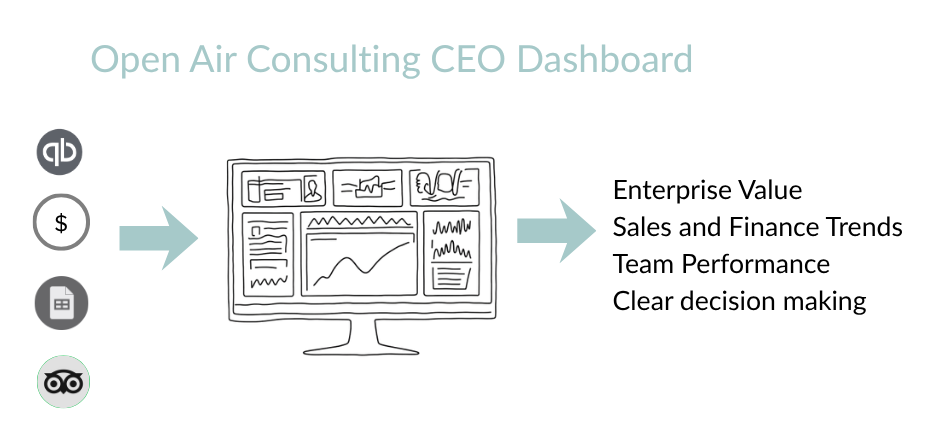
The business becomes too complex to manage by instinct alone. You may have different systems tracking different pieces of information: QuickBooks for financials, spreadsheets for sales goals, project tools for team initiatives, notes from leadership meetings and a dozen other scattered data points that only tell part of the story.
That’s when many business owners start to feel stuck in the weeds.
You are still working hard. You are still making decisions. But you may not have the clear, high-level view you need to lead the business with confidence. Have you ever been told you’re a micromanager? You probably don’t want to be like that; you’re really just looking for clarity about what’s working and what’s not.
Lack of insight drives the need for control. But it doesn’t have to be like that.
At Open Air Consulting, we believe the right data should make decision-making easier, not more overwhelming. A well-designed CEO Dashboard gives you a clear picture of your business as a whole so you can see what is working, what needs attention and how decisions in one area affect the entire operation.
Why the Right Metrics Matter
As your business has grown, you have probably started and stopped tracking different metrics at different times. Maybe you paid close attention to one set of numbers during a hiring push, another during a slow sales season and another when cash flow felt tight.
That is normal.
But as you move from operator to CEO, you need to become more intentional about which metrics deserve your attention on a consistent basis.
Not all data is useful. In fact, too much data can become its own form of clutter.
The goal is not to track everything. The goal is to track the right things, which are the numbers and indicators that help you make better decisions in the short term while building a stronger, more valuable business for the long term.
The CEO Dashboard we create with you brings those key data points together in one place. Because it is customized to how your business actually operates, you gain clarity around what to keep watching, what to stop tracking and where your attention will have the greatest impact.
Money Metrics: Know What Is Driving Profit and What Is Draining It
Financial statements are important, but they do not always tell the full story in a way that is easy to act on.
A year-end profit and loss statement may show whether the business made money, but it does not always help you understand what changed month by month, where profit was created or where money quietly leaked out of the business.
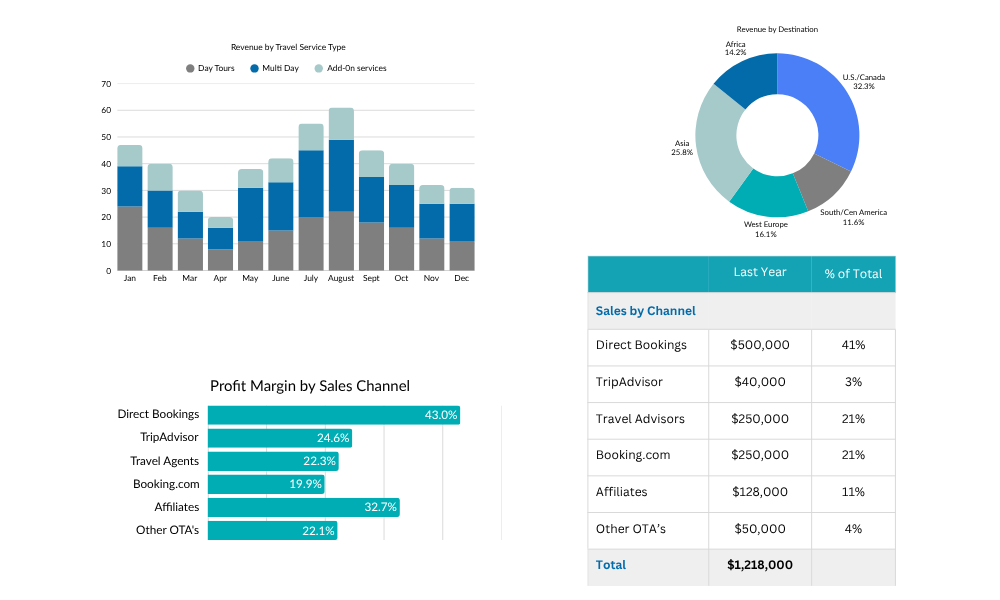
The CEO Dashboard syncs directly with your QuickBooks account so key financial metrics stay updated without requiring manual data entry.
From there, we can create clear visual charts that help you see the story behind the numbers. You can track revenue trends, profit drivers, expense patterns, margins and other key financial indicators on a monthly or quarterly basis.
Instead of waiting until the end of the year to understand what happened, you can make smarter adjustments throughout the year.
That kind of visibility helps you answer questions like:
Is the business becoming more profitable as it grows?
Are expenses increasing faster than revenue?
Which services, products, or client segments are creating the strongest returns?
Where are we losing margin without realizing it?
When you can see those answers clearly, financial leadership becomes less reactive and more strategic.
People Metrics: Defining What “Good work” Looks Like
A strong team does not happen by chance. It happens by design.
As the owner, one of your most important leadership responsibilities is helping your team understand how their work contributes to the company’s larger goals. When people can see the connection between their role, their performance, and the direction of the business, they are more empowered to do their best work.
The CEO Dashboard can include department-level and employee-level scorecards that bring together project initiatives, responsibilities, and personal KPIs (key performance indicators).
This makes leadership conversations much easier.
Instead of vague check-ins or performance conversations based on gut feeling, you and your team members can look at the same numbers and work from the same understanding of what “good work” looks like.
That clarity supports better one-on-one meetings, stronger accountability, and more productive coaching conversations.
It also helps you identify where someone needs support before a small issue becomes a major performance problem.
For the owner, this is a significant shift. You are no longer carrying every detail in your head or constantly chasing updates. You have a shared framework for helping the team perform well and for helping you lead them more effectively.
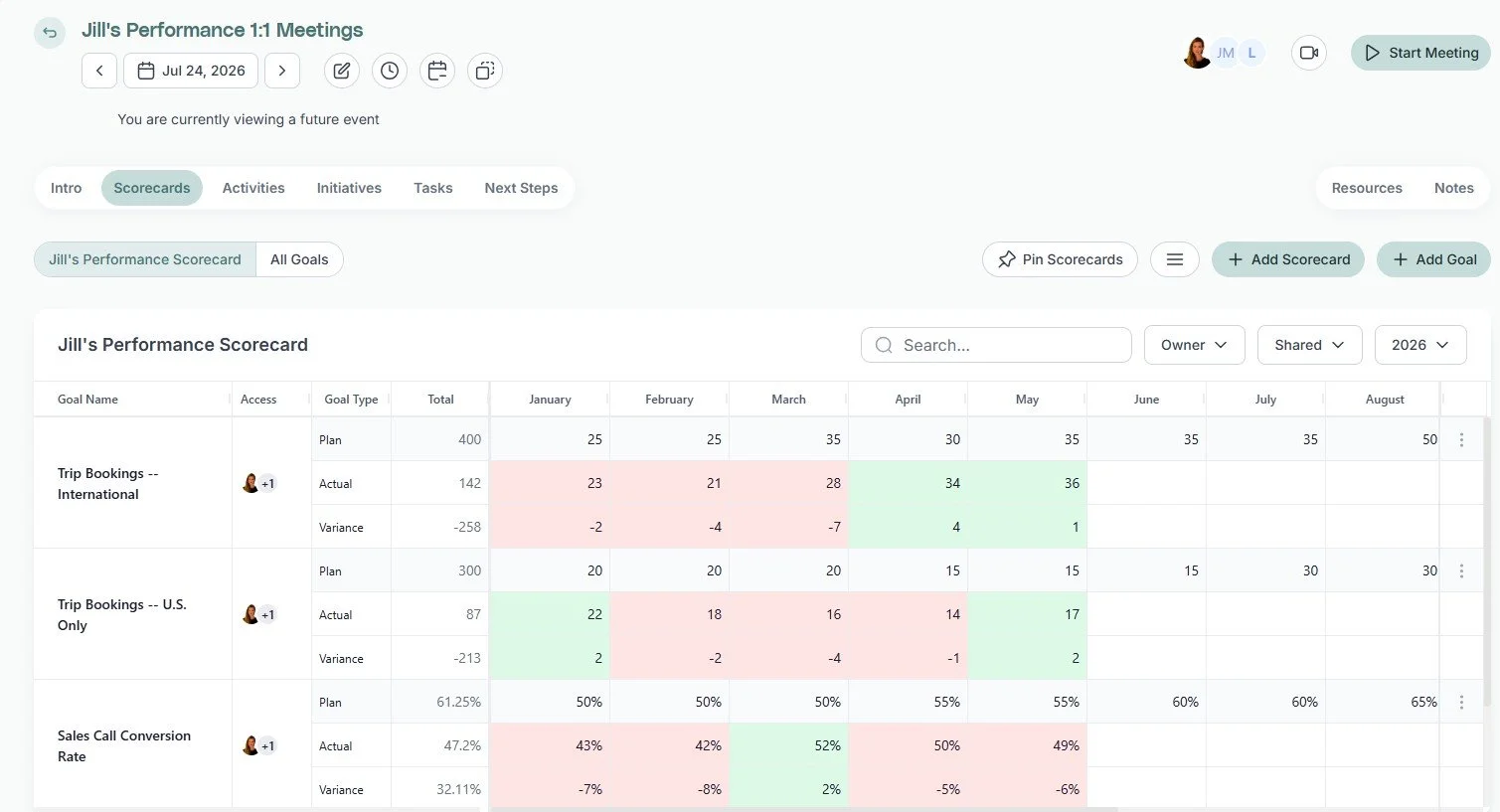
We create a custom scorecard for each employee, tailored to your priorities and how you want to define success for each team member. Align those metrics with the company’s goal targets and employees’ professional development tracks.
Health Score: Track the Value of What Cannot Be Found on a P&L
Enterprise value — the value your business could potentially command in a sale — is not based on financial performance alone.
Buyers and investors also look closely at the intangible qualities of the business. These include things like operational systems, team strength, leadership depth, company culture, brand presence, customer loyalty, recurring revenue, documented processes and more.
These non-financial qualities often determine whether a business is truly transferable.
A company that depends entirely on the owner’s constant involvement may generate revenue, but that does not automatically make it a valuable asset. A valuable business is one that can operate sustainably, grow intentionally and create results without relying on the owner as the central point of pressure.
The CEO Dashboard tracks 24 key non-financial qualities of your business to generate a business health score.
This gives you a way to measure progress on the areas that make the business healthier today and more valuable over time.
For example, documenting a key process, improving team accountability, strengthening your sales pipeline, or reducing customer concentration may not immediately show up as a dramatic change on your profit and loss statement. But those initiatives can make the business easier to run, less risky, and more attractive to a future buyer.
The dashboard helps you see that progress clearly.
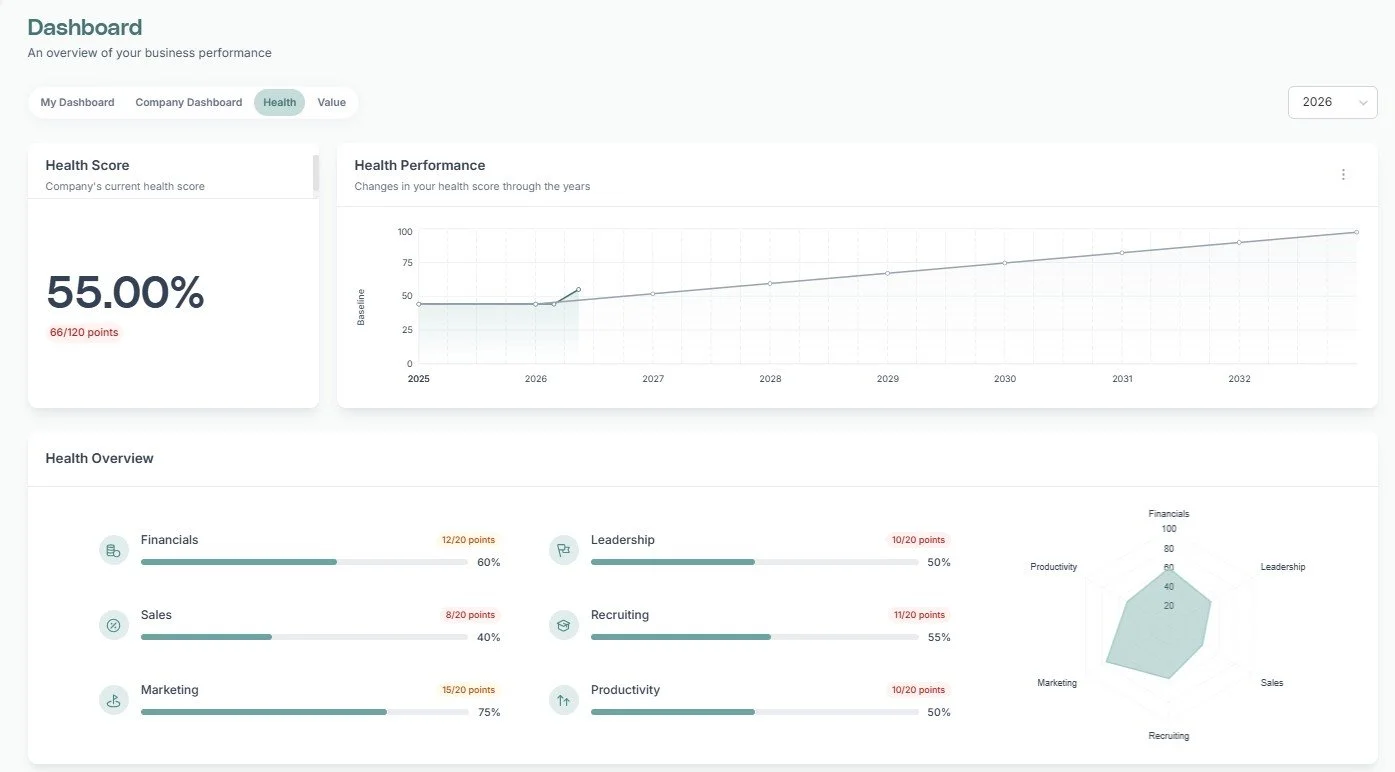
The health score reveals the impact on your company’s value of things like simplifying operational processes, creating a new policy, better team alignment. You feel the company improve; now you have a way to show that impact to a potential buyer.
Goal Trends: Put Today’s Decisions in a Bigger Context
One of the hardest parts of leading a business is keeping a long-term view when the short-term demands are loud.
This is especially true in industries like travel and tourism, where seasonality, shifting consumer behavior, economic changes, weather events, and global disruptions can all affect business performance.
When revenue fluctuates, it can be difficult to know whether you are looking at a real problem, a seasonal pattern, or a temporary dip.
That uncertainty can make every decision feel heavier than it needs to.
The CEO Dashboard helps place current performance in the context of your historical trends. You can compare actual results to target numbers month by month and see how close you are to meeting or exceeding your annual goals.
This helps you make more informed decisions about budgets, hiring, marketing investments, and operational priorities.
Instead of asking, “Can we afford this?” from a place of anxiety, you can look at the numbers and make a grounded decision.
That does not remove all uncertainty from business ownership — if only. But it does give you a much steadier foundation for deciding what comes next.
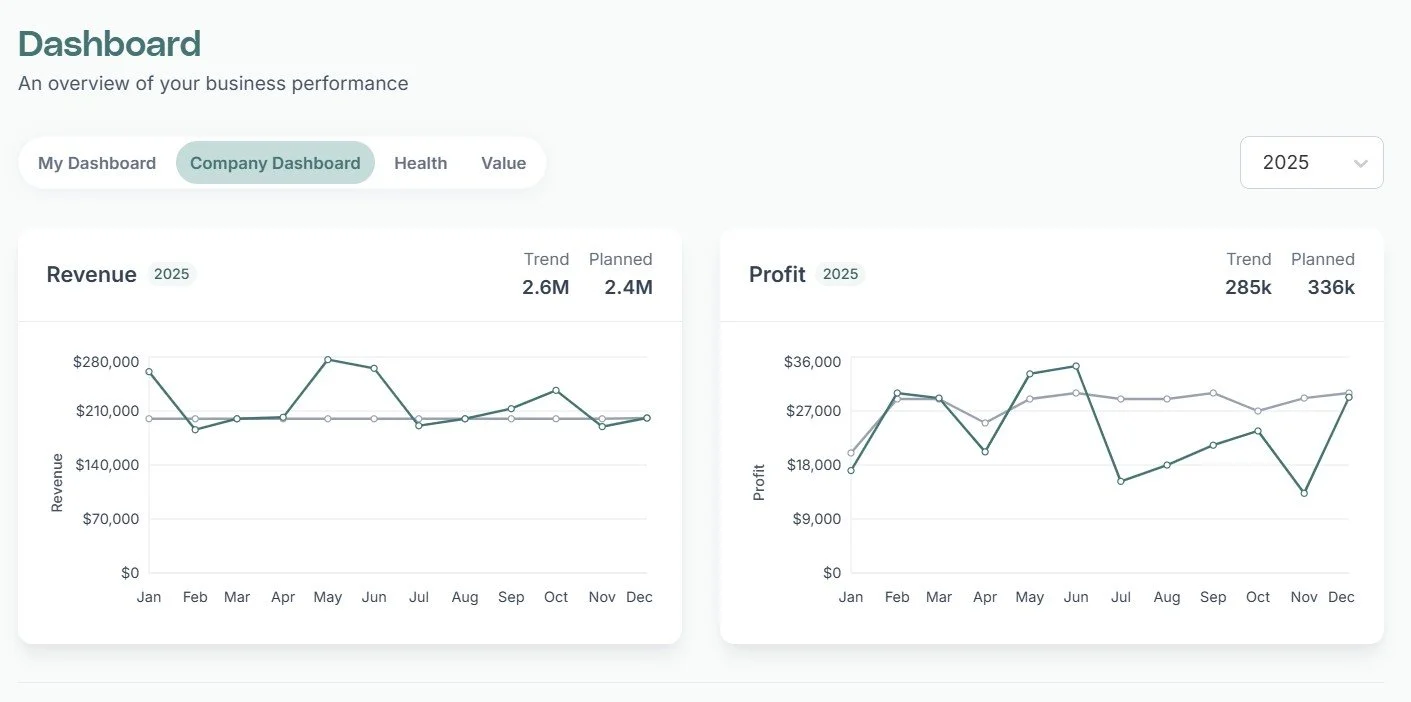
Numbers tell a story, and having clear visuals makes it easier to see that story for yourself, use this data wisely and anticipate the kinds of questions a future buyer or investor would ask when they see your financial history.
Enterprise Value: Build Toward the Number You Actually Need
If you are serious about selling your business someday, or even if you simply want more options for your future, you cannot leave value creation to chance.
A strong exit does not begin when you decide to sell. It begins years earlier, through the decisions you make about profitability, systems, team structure, leadership, customer concentration, and operational resilience.
The CEO Dashboard helps you track the initiatives that build enterprise value over time.
It shows how improvements in your business health, financial performance, and operational strength can move you closer to your target business value.
That matters because your desired sale price cannot be based only on what you hope the business is worth. It needs to be supported by clear evidence a buyer, investor, or lender can understand.
The dashboard gives you a record of that work.
It helps you see how close you are to your target value, where the gaps remain, and what needs to improve before the business is ready for a successful transition.
In other words, it helps you build toward your “sorry-not-sorry” asking price with actual proof.
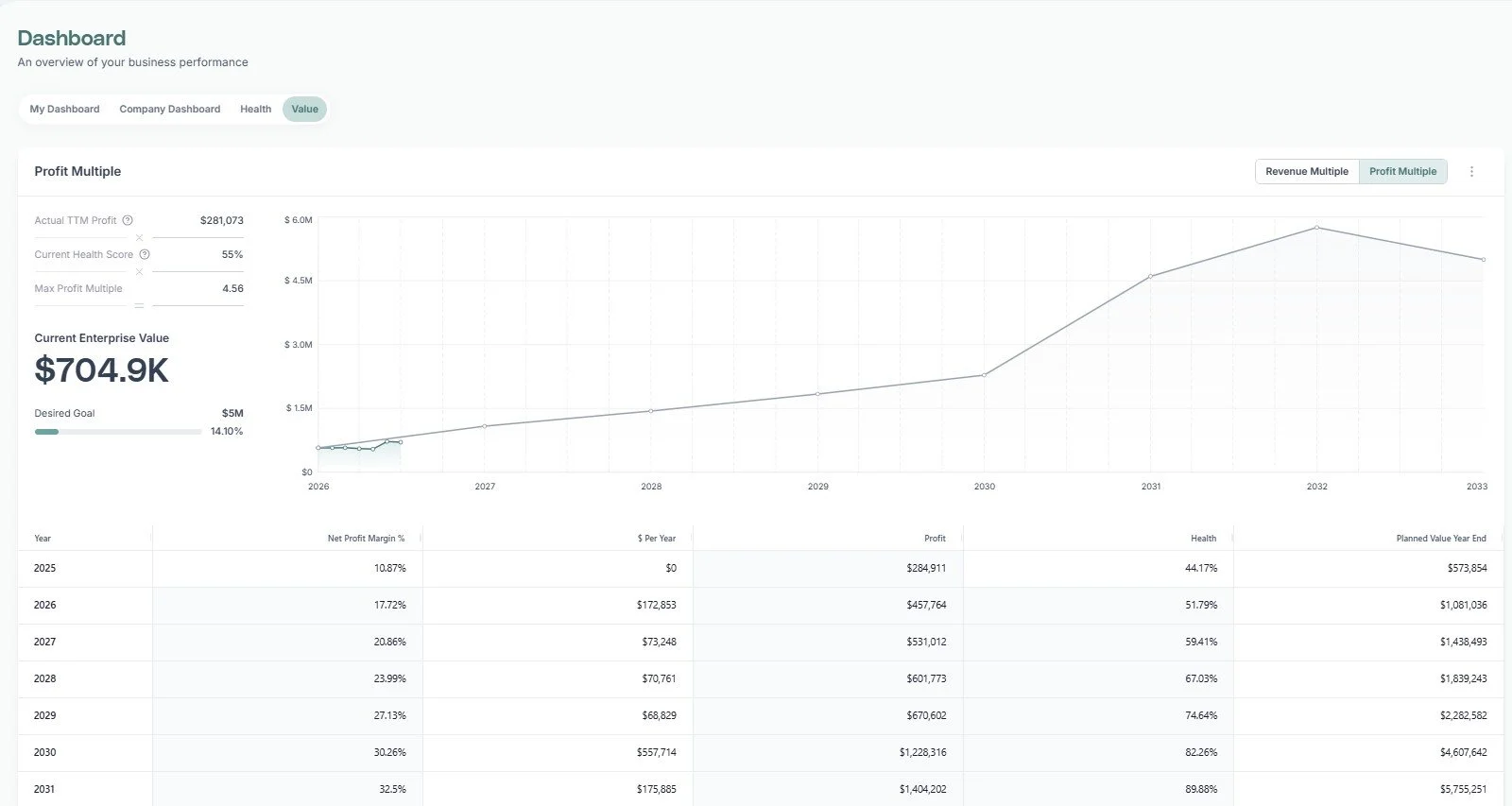
Tracking enterprise value gives business owners a clear guiding metric for making decisions that not only improve performance today, but also build a stronger, more transferable business that a buyer would be willing to pay for tomorrow.
Better Data Creates Better Leadership
The real purpose of a CEO Dashboard is not to stare at charts all day.
The purpose is to help you lead.
When your most important metrics are visible, organized, and connected to your larger goals, you can spend less time reacting and more time making thoughtful decisions.
You can lead your team with more clarity.
You can plan with more confidence.
You can see where the business is healthy, where it is vulnerable, and where your attention will create the greatest return.
Most importantly, you can begin shifting out of day-to-day survival mode and into the role your business needs from you now: strategic leader, value builder and CEO. You can control which data your employees see in the dashboard (ie, only their scorecard or the company’s overall performance as well as their own). This makes it way easier to get employee buy-in, especially if you’re moving towards a compensation plan that includes employee equity such as an employee stock ownership plan (ESOP).
At Open Air Consulting, we help business owners use tools like the CEO Dashboard to create a clearer picture of where their business stands today and what needs to happen next to make it healthier, stronger, and more valuable for the future.
Because the goal is not just to build a business that could sell someday.
The goal is to build a business that serves you better today.
